Biology and biomedicine · Fair entry · August 28, 2026 Demonstration
Thermal tolerance in intertidal snails
Does prior heat exposure change the upper thermal limit of Nucella?
This record is a demonstration: the project, its authors and its result are invented to show what a published record looks like here. The pictures are illustrations.
- Second Award Synopsys Silicon Valley Science and Technology Championship · 2027
- Ricoh Sustainable Development Award Synopsys Silicon Valley Science and Technology Championship · 2027
- Advanced to California Science and Engineering Fair Synopsys Silicon Valley Science and Technology Championship · 2027
-
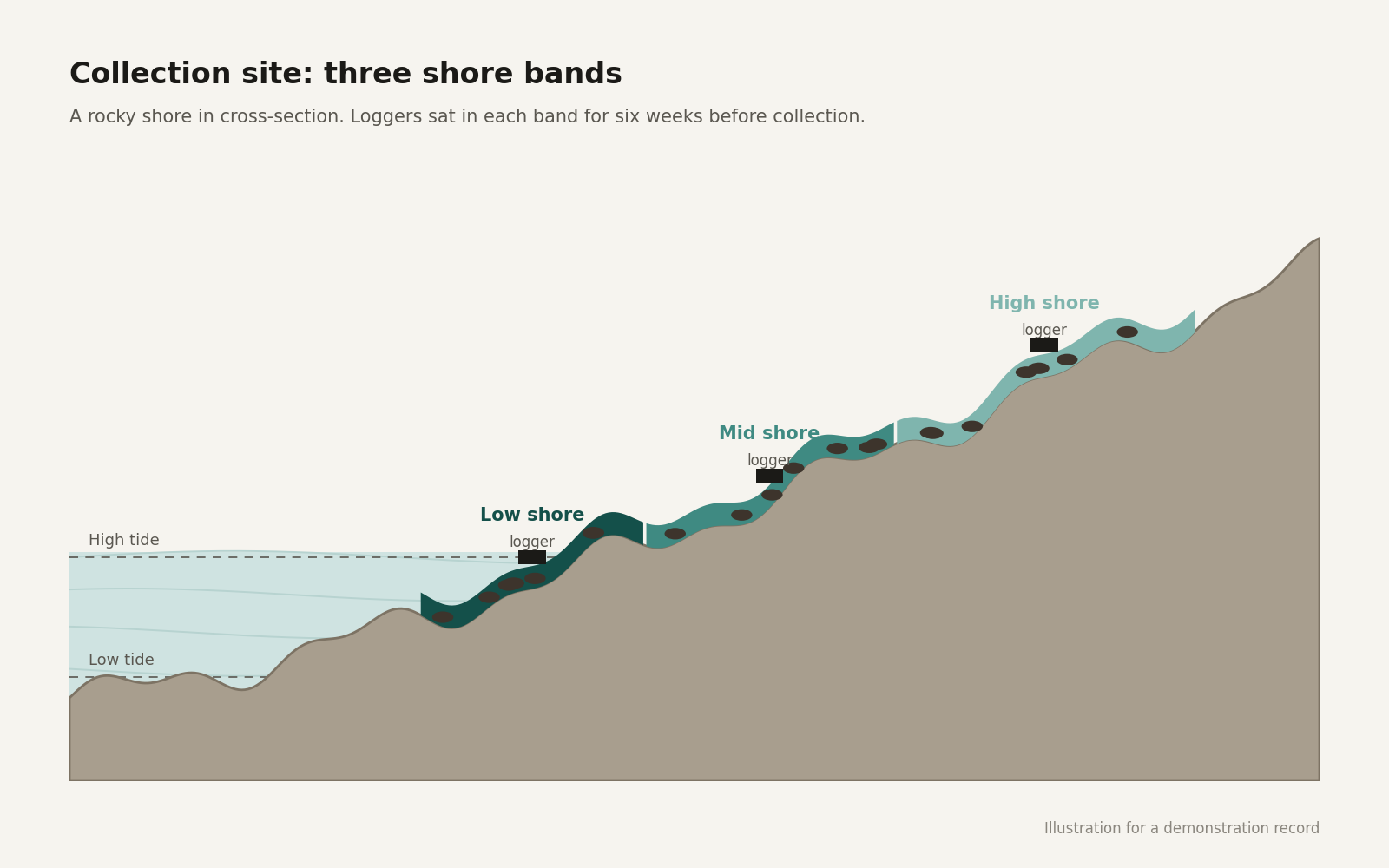
The collection site in cross-section: three shore bands, a temperature logger in each. Illustration.
-
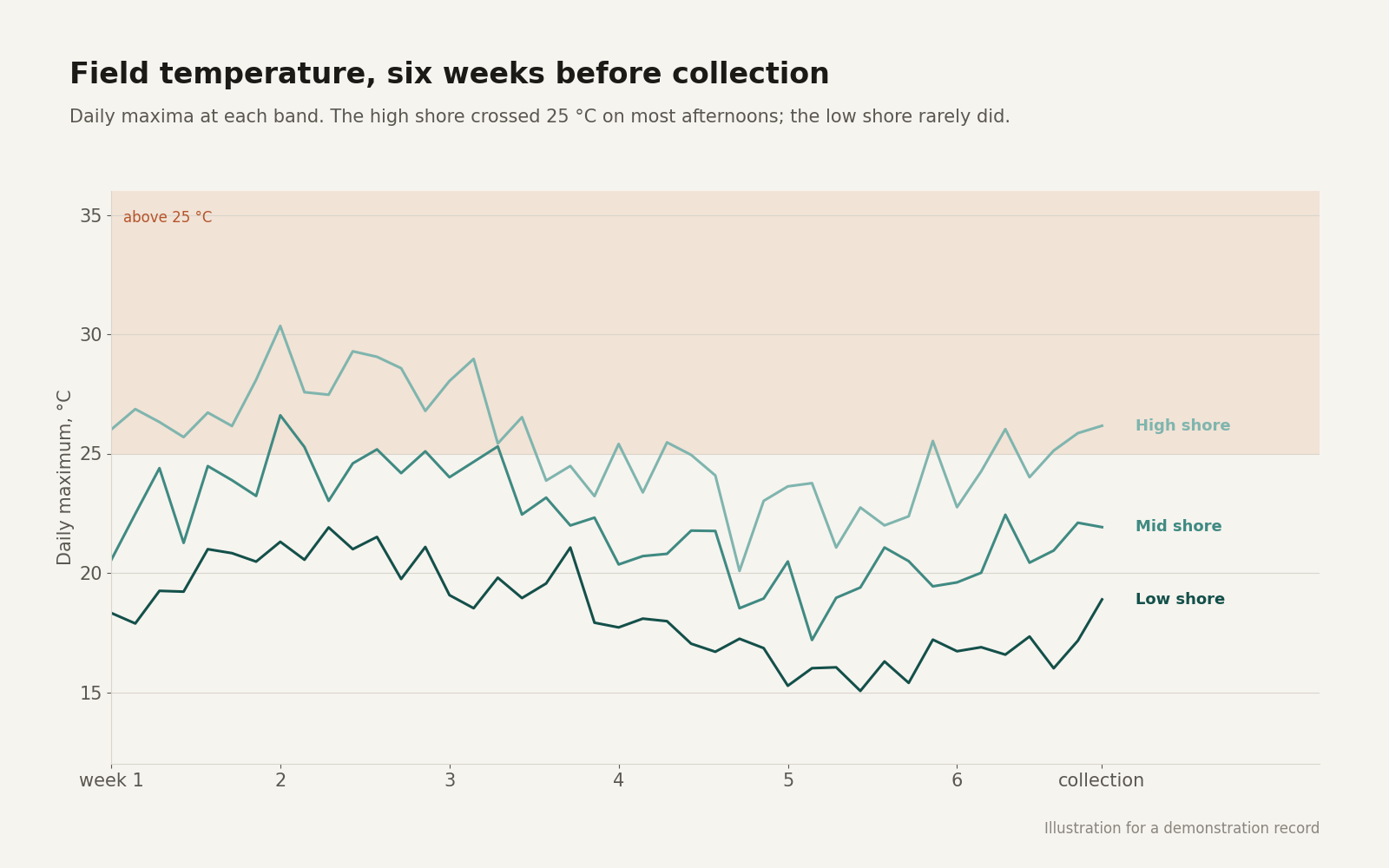
Six weeks of daily maxima before collection; the high shore crossed 25 °C most afternoons. Illustration.
-
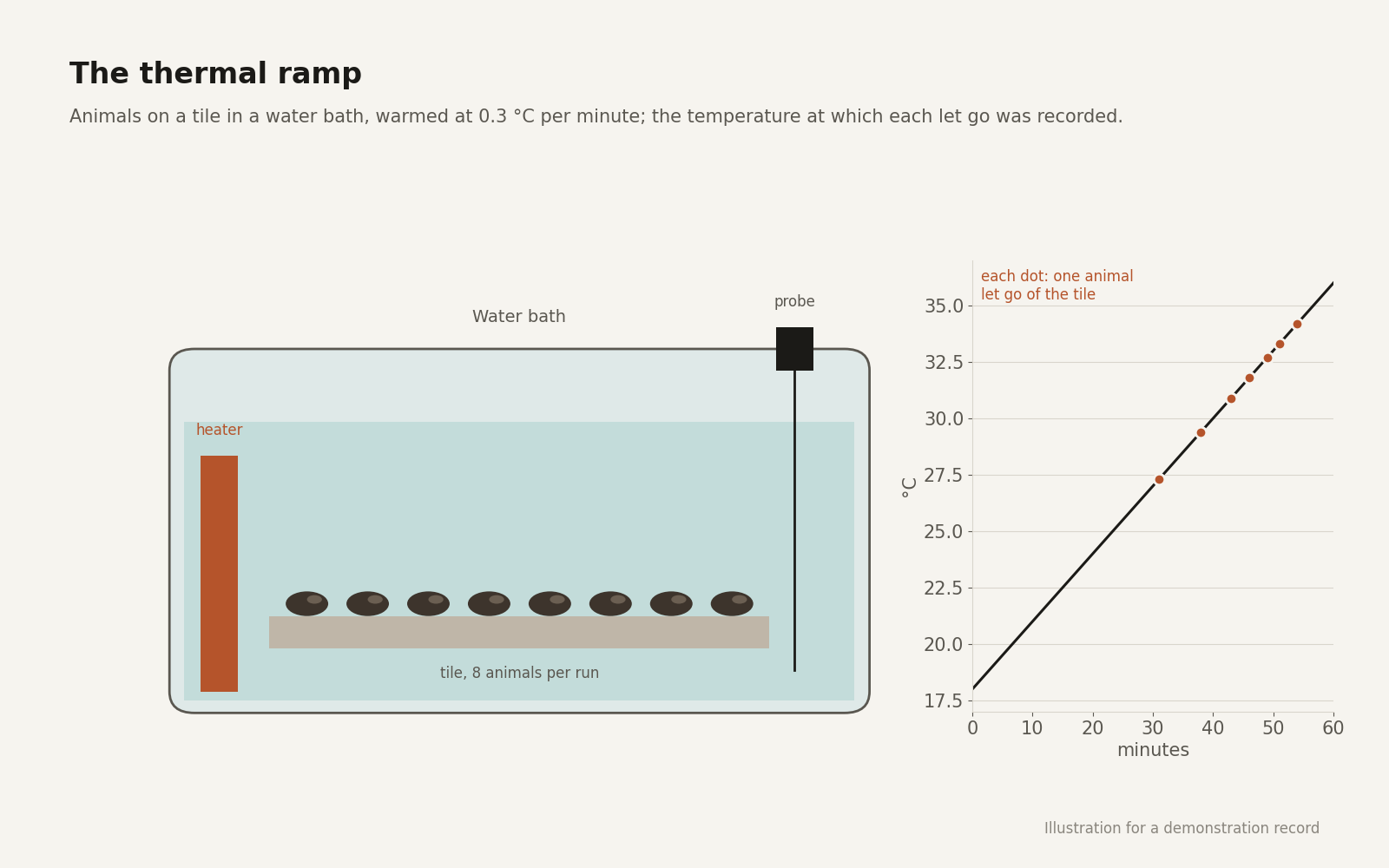
The ramp: 0.3 °C a minute in a water bath, and the temperature at which each animal let go. Illustration.
-
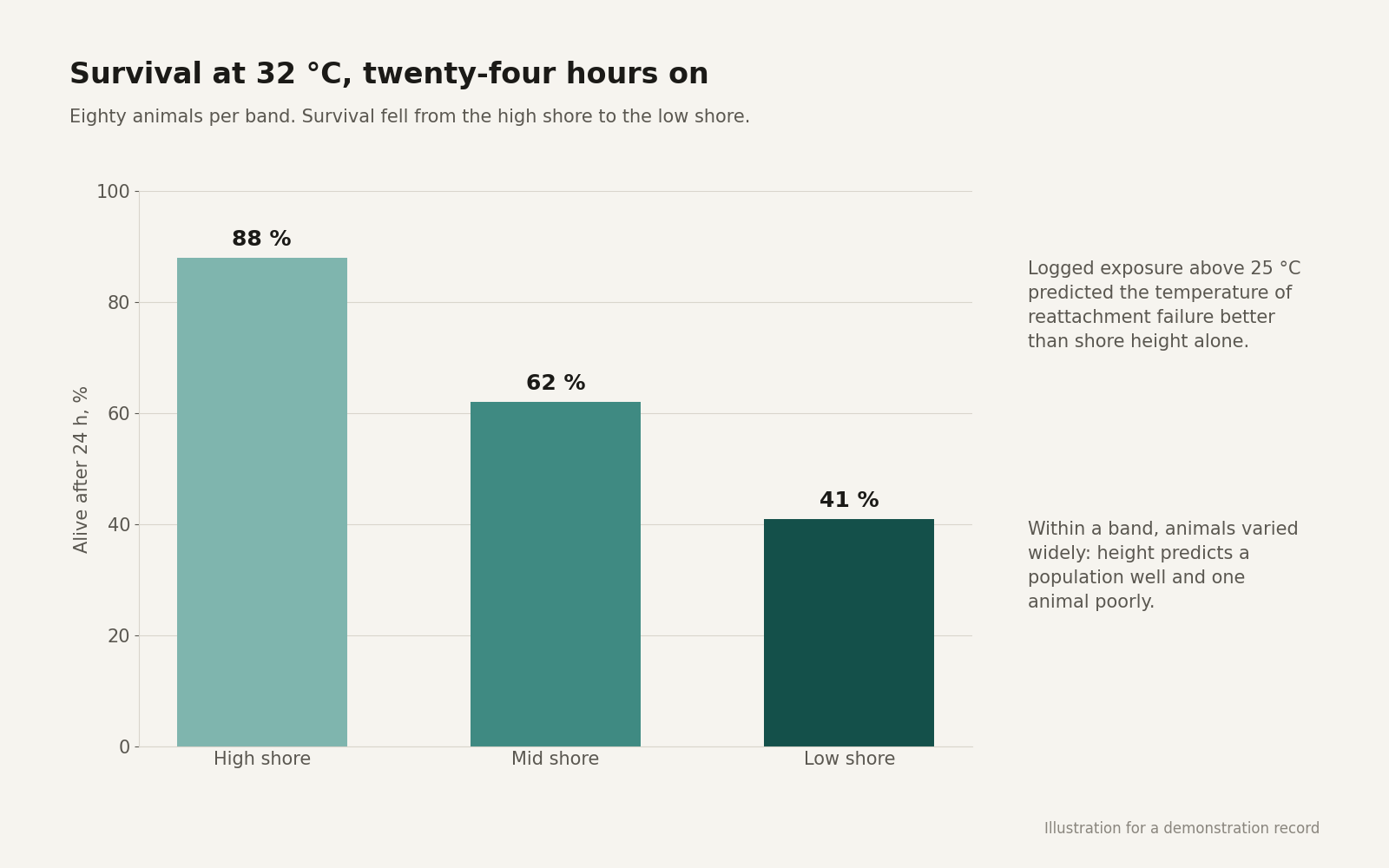
Survival at 32 °C after twenty-four hours, by shore band. Illustration.
Nothing is requested from Vimeo until you press play. Watch it there instead.
Intertidal gastropods experience a steep thermal gradient across a few vertical meters of shore, and their upper thermal limits are known to shift with acclimation history. This study asked whether exposure logged directly in the field predicts thermal tolerance measured in the laboratory, using 240 animals collected across three shore bands on four dates, with continuous temperature logging at each band for the six weeks preceding collection. Survival at thirty two degrees fell from eighty eight percent at the high shore to forty one percent at the low shore, and logged exposure above twenty five degrees predicted the temperature of reattachment failure more strongly than shore height alone. Within band variation was large enough that height predicts a population mean well and an individual animal poorly. The design is correlational and cannot separate acclimation from selection, which a transplant experiment would.
- Synopsys Silicon Valley Science and Technology Championship 2027 Animal Sciences · ANIM041
Data and code
dm_student1 designed the study, collected and analyzed the data, and wrote the paper. dm_sponsor1 reviewed the protocol and supervised laboratory safety.